History of Independence Day of France
France’s journey to independence in 1789 was marked by political tensions between reformist and conservative factions amid a severe economic crisis. The Estates General convened, and the Third Estate broke away to form the National Assembly, asserting sovereignty against the kingdom. On 20 June, the Assembly pushed for a new constitution, and following Louis XVI’s dismissal of Jacques Necker, the Parisians rallied. The storming of the Bastille on 14 July, where firearms, muskets, cannons, gunpowder, and prisoners played a role, became a symbol of revolutionary power. Leaders like Governor de Launay capitulated, marking the collapse of royal authority. Soon after, feudalism was abolished on 4 August, and the Declaration of the Rights of Man and of the Citizen was proclaimed on 26 August, establishing principles of liberty and equality.
Boarders of France
France, a country in western Europe, is bounded by the Bay of Biscay, North Atlantic Ocean, English Channel, and Mediterranean Sea, sharing borders with Belgium, Luxembourg, Germany, Switzerland, Italy, Monaco, Spain, and Andorra. Through the Channel Tunnel, it connects to the United Kingdom at Folkestone. Metropolitan France covers an area of 551,500 km² with a population of around 67 million, while Paris remains its capital and French its official language.
Key Figures of France
Joan of Arc
Joan of Arc (1412-1431) played a pivotal role in the Hundred Years War, leading France to victories against the English. Guided by holy visions of St Michael and St Catherine, she secured the crown for Charles VII, demonstrating religious devotion and strategic brilliance, even as she faced hostage situations, Burgundians, and ultimately heresy charges.
René Descartes
René Descartes (1596-1650), philosopher and mathematician, laid the foundation of modern philosophy and science, pioneering epistemology and earning the title father of modern science through his influential works.
King Louis XIV
Known as the Sun King, King Louis XIV (1638-1715) reigned as an absolute monarch for 72 years, consolidating power under Cardinal Mazarin and emphasizing the divine right of God in governance.
Voltaire
Voltaire (1694-1778), a writer of the Enlightenment, critiqued church and state, authored Candide, and endured imprisonment and exile, advocating freedom of thought.
Marie Antoinette
Marie Antoinette (1755-1793), last queen of France, known for lavish spending, married Louis-Auguste (Louis XVI), and her actions became symbolic of excess that fueled revolutionary anger.
Maximilien Robespierre
Maximilien Robespierre (1758-1794), a lawyer and revolutionary politician, pushed equality and democratic principles via the Committee of Public Safety, overseeing the Reign of Terror and the guillotine.
Napoleon Bonaparte
Napoleon Bonaparte (1769-1821), Emperor and military strategist, implemented the Napoleonic Code, influencing civil law and consolidating rights across France.
Victor Hugo
Victor Hugo (1802-1885), writer of poems, novels, and plays like Les Misérables, contributed to Romantic era literature and provided social commentary on French society.
Marie Curie
Marie Curie (1867-1934), a pioneering scientist from Poland, discovered radium and polonium, and became a double Nobel Prize winner, revolutionizing research in radioactivity.
Alfred Dreyfus
Alfred Dreyfus (1859-1935), an artillery officer wrongfully accused of treason, sparked national debates on anti-Semitism, religious freedom, and military justice in France.
National Things and Symbols of France
The Flag
The French flag, with blue, white, and red, emerged from the French Revolution, symbolizing unity between the monarchy’s royalty and national alliances.
The Motto (Liberté, Egalité, Fraternité)
Liberté, Egalité, Fraternité represents the core principles of France’s revolution, enshrined in the Declaration of the Rights of Man and of the Citizen in 1789, guiding the Republic.
La Marseillaise – The French National Anthem
La Marseillaise, composed in 1792 by Claude-Joseph Rouget de Lisle, became the anthem of revolt for the Marseillais and a symbol of patriotism during France’s struggle for liberty.
14th July – The National Day
14th July marks France’s National Day, commemorating the storming of the Bastille, celebrated with military parades on the Champs-Élysées, fireworks, and public festivities led by the President.
Marianne
Marianne, personifying freedom and the Republic, is seen in statues, coins, and stamps, often wearing the Phrygian cap, symbolizing the spirit of citizenship and liberty.
Le Coq
The cockerel (Le Coq) represents national identity, tracing back to the Gauls, symbolizing vigilance and pride during the French Revolution and beyond.
Tourist Places in France
The French Riviera (Côte d’Azur)
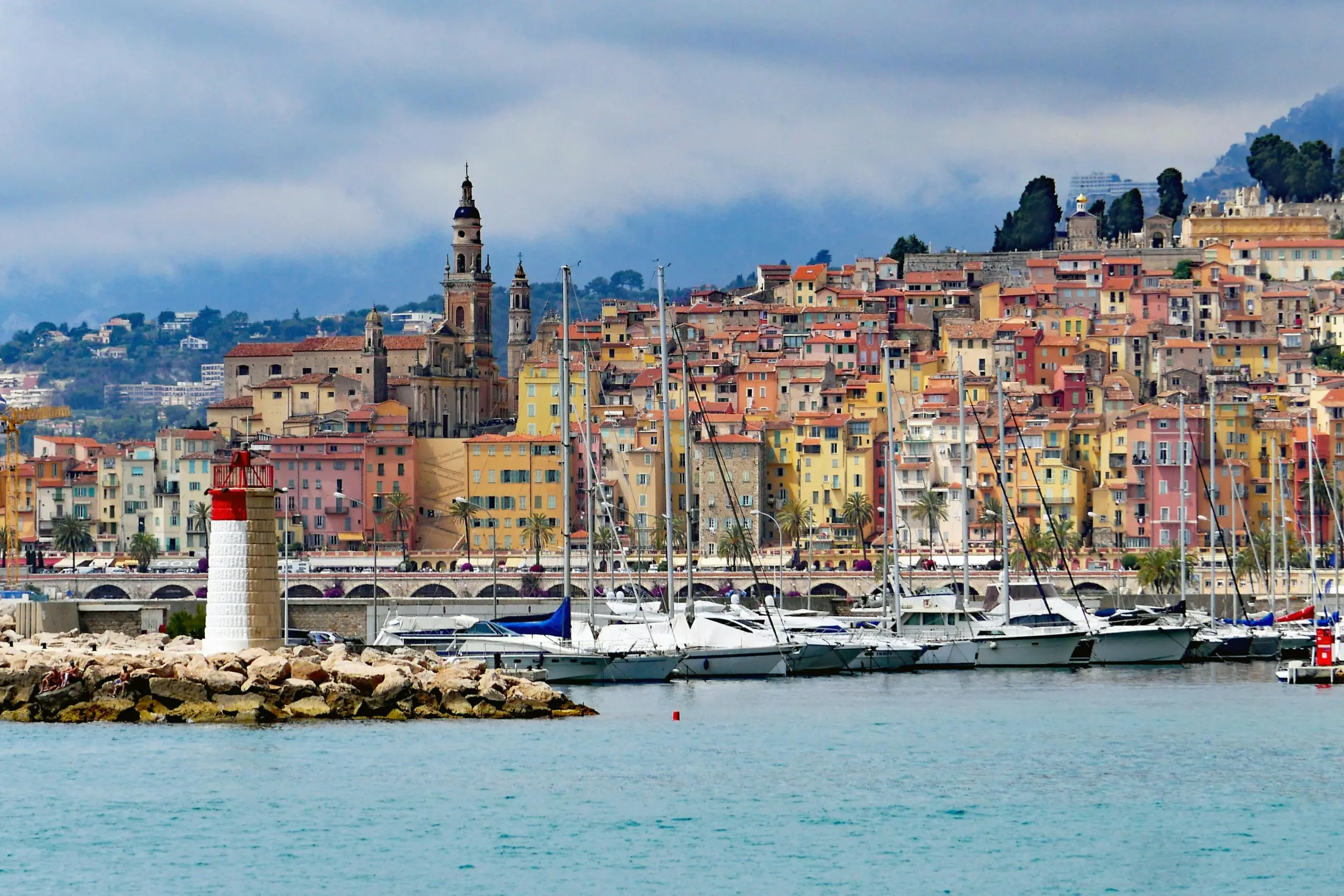
The French Riviera, with its azure seas and Belle Époque villas, features Nice, Monaco, Saint-Tropez, and Cannes, offering palm-lined promenades, luxury resorts, and culinary delights like Lavender Tartlet. This region is a highlight in festive travel countdowns.
Champagne-Ardenne
Champagne-Ardenne captivates with vineyards, half-timbered towns, and iconic brands like Moët & Chandon, blending historical architecture with modern luxury, perfect for festive counter tours.
Provence
In Provence, fields of lavender, olive groves, and vineyards recall Van Gogh and Cézanne, while local markets and Château La Coste enrich cultural exploration.
Loire Valley
Known as the Garden of France, the Loire Valley is dotted with châteaux, vineyards, and Renaissance architecture, making it ideal for immersive historical and culinary experiences.
Rhône-Alpes
Rhône-Alpes offers Alps’ lakes, villages, and vineyards, with attractions like Château de Candie and Le Café de Jules blending natural beauty with regional gastronomy.
Burgundy
Burgundy is famed for vineyards, châteaux, and Romanesque churches, offering wine tastings, canal cruises, and scenic escapes like the Treehouse Suite.
The Dordogne
The Dordogne region boasts prehistoric caves, châteaux, and valleys, with towns like Bergerac and Sarlat-la-Canéda, perfect for history enthusiasts and culinary travelers.
Auvergne
Auvergne features volcanoes, plateaus, medieval villages, and thermal springs, offering nature lovers cultural immersion alongside Château de Murol.
Annecy
Nestled in the Alps, Annecy enchants with turquoise lakes, cobbled streets, and historic landmarks like Château d’Annecy, combining adventure with luxury balneotherapy.
Lyon
Lyon, with Renaissance architecture, riverside promenades, and UNESCO heritage sites, delights with culinary experiences like Soupe à l’Oignon and quenelles de légumes.
Population of France
France’s population in 2025 is around 66.69 million, accounting for 0.81% of the world population, with a density of 122 per km² and 82.55% urbanization, a median age of 42.3 years.
Currency of France
The Euro (€) serves as France’s currency, widely used for payments and financial transactions, making it easy to manage travel and commerce.