History of Independence Day of Estonia
Estonia’s journey to independence is a tale of resilience, marked by foreign domination under the Russian Empire and upheavals of World War I and the 1917 revolutions. From the Great Northern War to the end of serfdom in the Baltic provinces, Estonia nurtured a national awakening expressed through folk songs, the efforts of Jakob Hurt, Estonian-language newspapers, and societies that fostered ethnic consciousness among the intelligentsia. Despite Russification policies by Tsar Alexander III, the country achieved cultural autonomy and pursued agrarian reforms. Key milestones included the Tartu Peace Treaty, the 1905 Russian Revolution, strikes, land riots, and the formation of the Estonian National Council. Through the German occupation, February Revolution, and establishment of Maapäev in Tallinn, delegates asserted sovereignty, facing Bolshevik forces, the Red Guard, and German troops. Leaders like Konstantin Päts, Jüri Vilms, and Konstantin Konik issued the Manifesto to the Peoples of Estonia, setting the foundation for a democratic Republic with provisional government, national institutions, a constitution, and eventual War of Independence, celebrated today with military parades in Freedom Square. Estonia later endured Soviet occupation, mass deportations, yet movements like the Singing Revolution, Estonian Popular Front, and events at Tallinn Song Festival Grounds restored independence, highlighted by the Declaration on the Sovereignty of the Estonian SSR, Pikk Hermann Tower, and Baltic Way, achieving UN recognition after the August 1991 Soviet coup.
Borders of Estonia
Situated in Northern Europe, the Republic of Estonia lies along the Baltic Sea, bordered by the Gulf of Finland, Finland, Sweden, Latvia, Lake Peipus, and Russia, encompassing a mainland and 2,222 islands over 45,227 square kilometers. The Treaty of Tartu, Narva River, Narvataguse, and Setumaa define historical boundaries. Today, Estonia enjoys an advanced economy, parliamentary democracy, liberal democracy, membership in the European Union, Eurozone, OECD, Schengen Area, NATO, and presence at the United Nations Security Council, symbolizing a modern and secure nation.
Key Figures of Estonia
Arvo Pärt – Composer of contemporary music, known for tintinnabuli and religious compositions, emigrated from the Soviet Union, leaving a legacy at the Arvo Pärt Centre.
Tommy Cash – A rapper blending Eastern European style with provocative music videos showcased at Glastonbury Festival.
Roberta Einer – Fashion designer shining at London Fashion Week, dressing icons like Lady Gaga and Rihanna.
Carmen Kass – Supermodel and chess enthusiast, representing Estonia globally in Vogue, Elle, and Chanel campaigns.
Mark Kostabi – Contemporary artist creating political art for major museums like Metropolitan Museum of Art and Guggenheim Museum.
Edward von Lõngus – Dubbed the Estonian Banksy, spreads street art messages anonymously in cities like Brussels, Rome, and Berlin.
Kelly Sildaru – Olympic freestyle skier, excelling in slopestyle, halfpipe, and earning international recognition via YouTube.
Ragnar Klavan – Footballer, played for Liverpool, known for “Klavan Turn”, and appeared in Eurovision 2023.
Kaja Kallas – Prime Minister, member of the Reform Party, active in European politics and security affairs.
Margus Hunt – Track and field athlete, Junior World Champion, also played in the NFL.
Baruto (Kaido Höövelson) – Sumo wrestler, entrepreneur, politician, and tourism figure in Estonia.
National Things and Symbols of Estonia
National Animal – Wolf – Represents Estonian folklore, known as metsakutsu, intelligent, and a symbol of family.
National Bird – Barn Swallow – With 150,000 pairs, symbolizes freedom and good fortune.
National Flower – Cornflower – A blue flower adorning national costumes, dishes, and song festivals.
National Stone – Limestone – Shapes Tallinn’s towers, walls, and landmarks across Ontika, Pakri, and Türisalu.
National Fish – Herring – Traditional cuisine item from Gulf of Finland, served fried, marinated, or smoked.
National Butterfly – Swallowtail – Known as pääsusaba, a symbol of beauty and Estonia’s natural heritage.
During festive celebrations, people enjoy the festive counter marking the countdown to Independence Day.
Population of Estonia
Estonia’s population evolved from 1,211,537 in 1960 to 1,569,174 in 1990, stabilizing at 1,371,986 in 2024, reflecting demographic growth, urbanization, and national trends.
Currency of Estonia
The Euro (EUR, €) is Estonia’s currency, divided into cents, facilitating trade, tourism, and integration into the Eurozone.
Tourist Places in Estonia
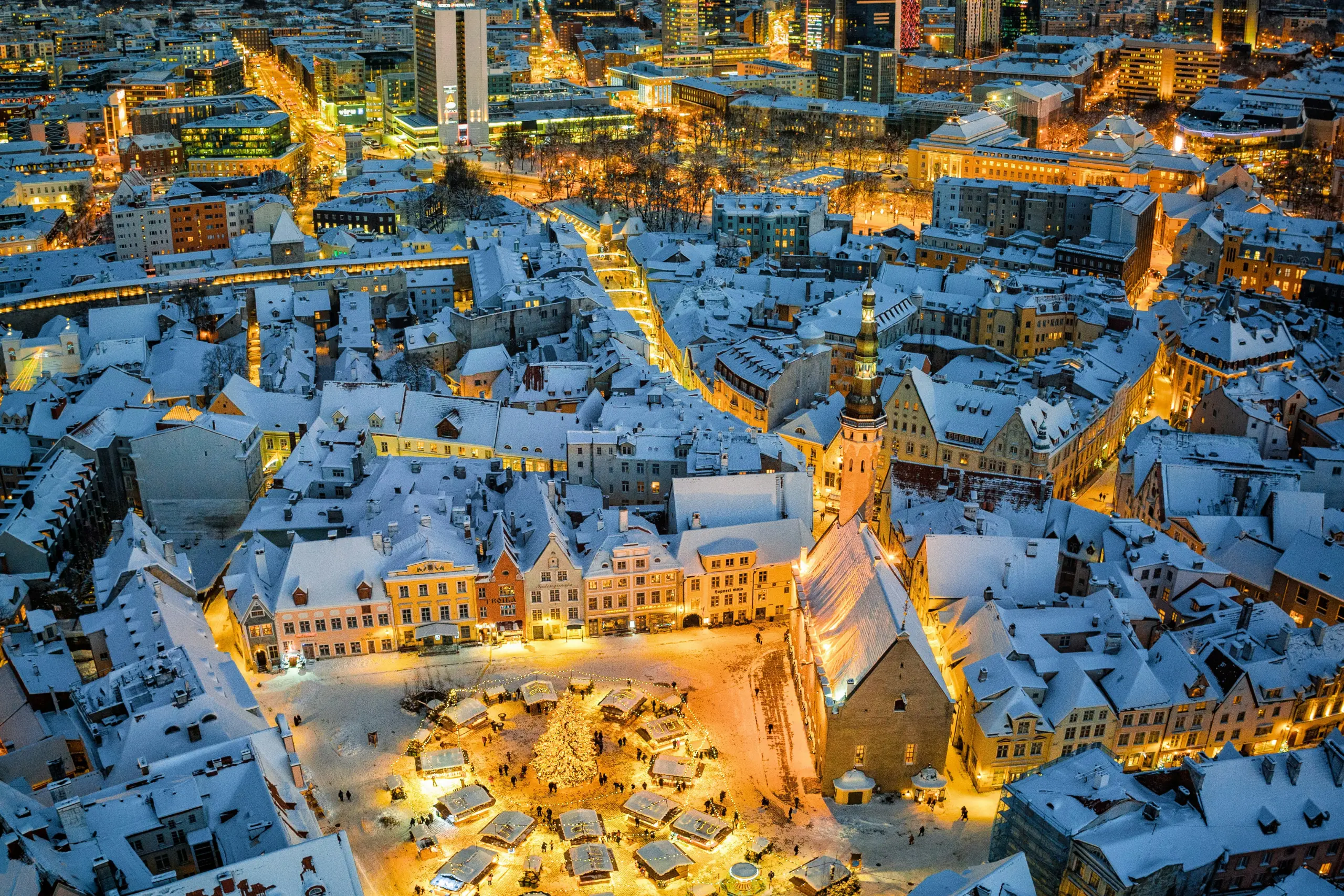
Tallinn – The Fairy-Tale Capital – Famous for Old Town, UNESCO heritage, cobbled streets, Toompea Castle, museums, cafés, and vibrant nightlife.
Tartu – The Intellectual Hub – Features the University of Tartu, Upside Down House, Emajõgi River, Estonian National Museum, and artistic cafés.
Pärnu – The Summer Capital – Known for beaches, spas, music festivals, mud baths, and a relaxing summer atmosphere.
Narva – A Blend of Cultures – Highlights Narva Castle, Ivangorod Fortress, cross-cultural architecture, and riverside walks.
Haapsalu – A Charming Seaside Escape – Features wooden houses, Haapsalu Castle, festivals, and seaside views.
Viljandi – The City of Folk Music – Famous for mediaeval ruins, Folk Music Festival, galleries, and handicrafts.
Kuressaare – The Island Gem – Located in Saaremaa, offers Kuressaare Castle, spa culture, and quiet coastal charm.
Rakvere – Where History Comes Alive – Showcases mediaeval history, castle reenactments, festivals, and the Tarvas statue.
Võru – A Nature Lover’s Paradise – Surrounded by forests, lakes, Haanja Nature Park, and Suur Munamägi.
Valga – A City with Two Countries – Cross-border culture shared with Latvia, historic monuments, parks, and cafés.