History of the Croatian Dan Neovisnosti
The Brioni Declaration of 1991 marked a pivotal moment as Croatia and Slovenia sought independence from the Socialist Federal Republic of Yugoslavia. Supported by the European Community and aiming for a peaceful solution to the breakup of Yugoslavia, events escalated after October 7, when the JNA (Yugoslav People’s Army) bombed Zagreb. State parliament at Banski Dvori, led by President Franjo Tuđman and state officials, coordinated responses during air strikes on October 8. With parliamentary councils relocating to a secret location, Speaker of the Parliament Žarko Domljan guided efforts for separation and freedom, ensuring the survival of the Republic of Croatia. Through state-law relations with the SFRY, the Croatian Parliament passed a legal act to formalize independence, honoring cultural autonomy, civil rights, and securing recognition from the international community via mediation and the Declaration of Sovereignty, allowing a free, independent, and sovereign state.
Boarders of Croatia
Situated in southeastern Europe on the Balkan Peninsula, Croatia borders the Adriatic Sea, Mediterranean Sea, Slovenia, Hungary, Bosnia and Herzegovina, Serbia, and Montenegro, with maritime proximity to Italy. Covering 56,594 km², comparable to West Virginia, the country features coastal areas like the Gulf of Trieste and Kvarner Gulf, the Istria peninsula, the Dinaric Alps including Velika Kapela, Mala Kapela, and Mount Dinara. Regions like Slavonia and Dalmatia reveal historical ties to the Republic of Venice, while rivers Sava and Danube flow alongside 1,000 islands such as Krk, Korčula, Brač, Hvar, Rab, Pag, Lošinj, Ugljan, Čiovo, Murter, Vis, Cres, Lastovo, and Brijuni. With a population of 4,225,000, the capital Zagreb hosts around 800,000 residents, surrounded by urban areas, Sava river, and Mount Medvednica, while Croatian language, map, international borders, major cities, roads, railroads, and airports complete the geographic profile.
Key figures of Croatia
King Zvonimir
King Zvonimir is remembered through the Baška Tablet and Glagolitic script, linked to the Benedictine monastery and the Church of St Lucy, an Old Croatian monument dating to 1100, marking land donations.
Dujam I
Dujam I, the first Frankopan, founded the noble family of Counts of Krk, leaving a legacy in Croatian history.
Julije Klović
Known as Julio Clovio or Don Giulio Clovio Croata, Julije Klović earned the title Michelangelo of the miniature, with connections to Grižane, Crikvenica, Novi Vinodolski, and influences from El Greco, Michelangelo, Titian, Raphael, with works now in museums in New York, London, Vienna, Munich, Paris, and the Vatican.
Franjo Petrić
Franjo Petrić of Cres contributed to Protestantism, studying Greek language, philosophy, literature, Zarathustra, Hermes Trismegitos, and Latin, producing 13 books.
Mark Antun de Dominis
Mark Antun de Dominis from Rab advanced mathematics in Padua and Rome, excelling in rhetoric, logic, and influencing Isaac Newton’s Optics, studying white light, dispersion, rainbows, Sun, Moon, and tides.
Dinko Vitezić
From Vrbnik, Krk, Dinko Vitezić participated in the Viennese parliament and rural island Liburnian municipalities in 1873 under Bishop Ivan Vitezić, maintaining a library of 10,000 books.
Ivan pl. Zajc
Ivan pl. Zajc, trained in piano and violin, composed early, attended Milan Conservatory, created Nikola Šubić Zrinski, and contributed to Croatian operas as a musical symbol.
Andrija Mohorovičić
Andrija Mohorovičić, born in Volosko, Opatija, studied seismology, mathematics, physics, meteorology, discovering Mohorovičić Discontinuity or Moho, mastering six languages.
Ivan Lupis
From Rijeka, Ivan Lupis co-invented the torpedo with Robert Whitehead in 1860 at the Torpedo Factory, 1873.
Ivan Mažuranić
Ivan Mažuranić, poet and politician, served as Croatian chancellor and ban pučanin, known for The Death of Smail-aga Čengić, with 160 editions and multiple translations.
Fiorello la Guardia
Fiorello la Guardia ran the New York consular agency, connected to Kvarner between 1904–1906, overseeing Rijeka emigrants for medical examinations, commissions, and ship departures.
King Edward VIII
Visiting the Adriatic, King Edward VIII with Wallis Simpson in August 1936 swam nude in Rab, reflecting global nudism trends.
Andy Warhol
Born to parents Ondrej Warhola and Julia Zavacky-Warhola in Kvarner, Andy Warhol emigrated to America between 1912–1921.
National things and symbols of Croatia
Patron Saint
Saint Joseph (Sveti Josip) is the protector of the Croatian homeland since 1687, recognized by Hrvatski sabor and Bishop Martin Borković, with memorials like Šime Vulas relief affirming his role.
National Flower
The Iris croatica (Hrvatska perunika), Croatia’s national flower, recognized in 2000 at Japan Flora 2000, was studied by Andrija-Željko Lovrić from Ruđer Bošković Institute and HAZU, thriving in light forests, Hrast medunac, Crni grab, in Nature Park Medvednica, Strahinjčica, Nature Park Samoborsko gorje, Ogulinsko zagorje, growing up to 1 meter high, with blue, white, purple, yellow, red blooms and scent.
Cultural Symbol
The Hrvatski pleter (Croatian interlace), or troplet, is a 3-ribbon geometric ornament from old Croatian culture, appearing in pre-Romanesque churches, monasteries, 9th–12th century, and artifacts like Bašćanska ploča, Višeslavova krstionica, Branimirov natpis.
Old Slavic Letter
Glagolitic script (Glagoljica), the oldest Slavic alphabet, originated in the 9th century, used through the 19th century, developed by Sveti Ćiril (Saint Cyril), a Byzantine monk from Solun, with 38 graphemes, evolving into Latin alphabet, obla glagoljica, rounded Glagolitic, uglata glagoljica, angular Glagolitic, featured in Bašćanska ploča, Vinodolski zakonik, Misal po zakonu rimskoga dvora, supporting Chakavian dialect and early Croatian books Što, Kaj, Ča.
National Animal
The European pine marten (Kuna zlatica) is a protected, endangered national animal with luxurious fur, inhabiting forests, Brač, Papuk Nature Park, Plitvice Lakes National Park, Velebit Nature, active in day rest, night hunting, feeding on rabbits, mice, squirrels, representing Croatian wildlife.
National Tree
The Slavonian oak (Slavonski hrast/Hrast lužnjak) grows 40–50 meters, lives 500–800 to 1500 years, has a vast crown, hardwood used for construction, interior design, firewood, wine barrels, primarily in Slavonija and Posavina.
Other Symbols
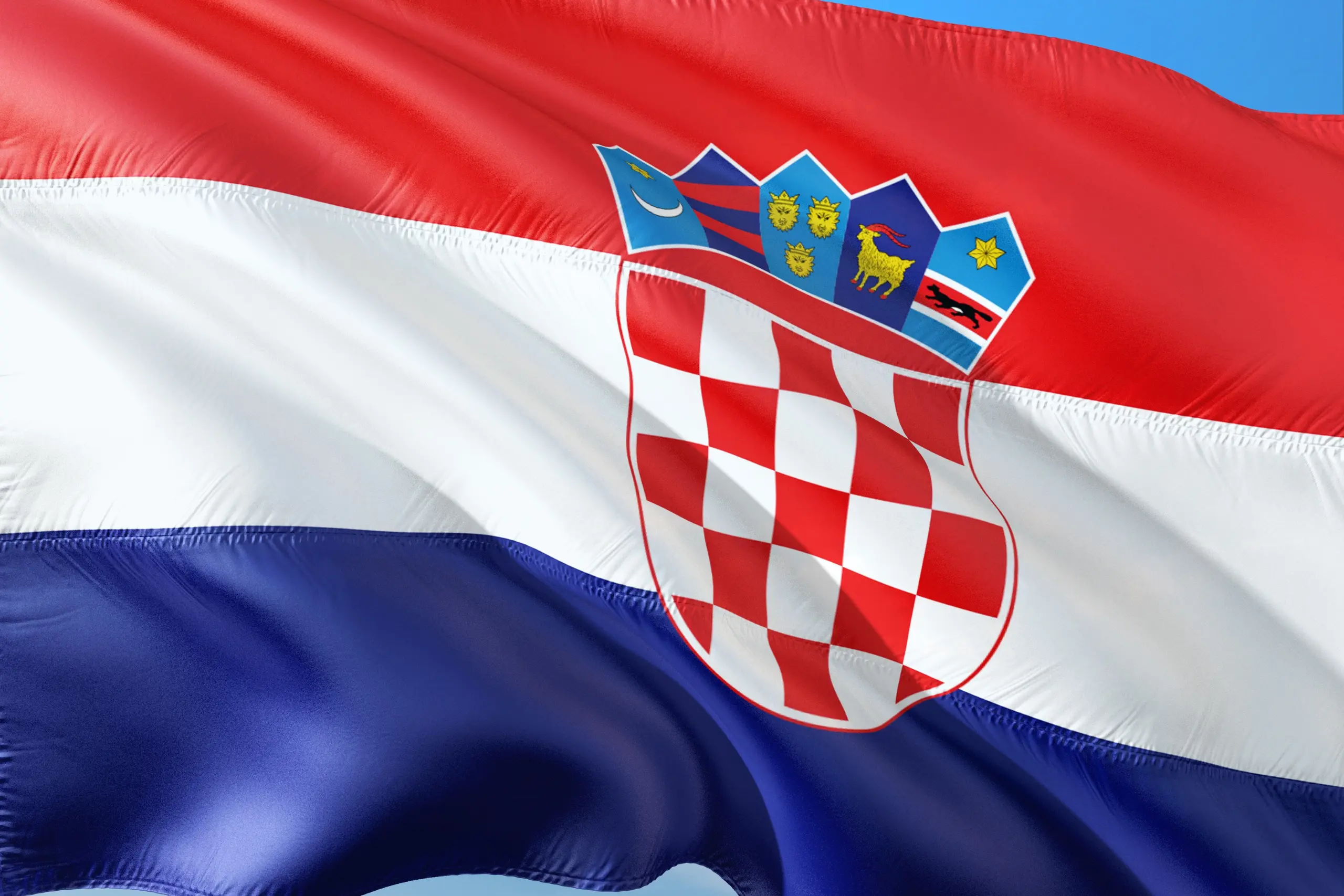
Croatia’s Coat of arms (Grb Republike Hrvatske), Flag (Zastava Republike Hrvatske), national anthem (Lijepa naša domovino), Old Croatian crown (Starohrvatska kruna, Tomislavova kruna, Zvonimirova kruna), Croatian Cyrillic (Hrvatska ćirilica, bosančica) complete the national identity.
Currency of Croatia
Since January 2023, Croatia adopted the euro (EUR), replacing the Croatian kuna (HRK). Travelers can use euros widely in shops and restaurants, while cards are commonly accepted. Croatia’s Eurozone membership ensures smooth monetary transactions across 20 countries. Euro denominations include banknotes (€5, €10, €20, €50, €100, €200, €500) and coins (1, 2, 5, 10, 20 cents). The value varies daily, so pre-ordering travel money online, by post, or via click and collect from stores is ideal. Knowing local exchange rates helps manage travel money, making your trip more efficient. Experiencing Croatia’s currency system firsthand simplifies spending during your festive countdown adventures.
Tourist places
Korčula
Visiting Korčula was an unforgettable detour. Korčula Town, a fortified settlement on a peninsula, reminded me of a miniature Dubrovnik with its labyrinth of narrow streets. Beyond the town, the island offers beaches, swimming spots, pine forests, and vineyards producing white wines best enjoyed at sunset. Easily reached from Orebic by ferry or from Split and Dubrovnik, Korčula is perfect for a leisurely Adriatic escape. For those seeking isolated isles, cruises or gulet charters to Vis and Pag maximize time. Spending a morning in Orebić before the ferry, I felt the verdant island’s charm; it became one of my favourite places in Croatia, making it a highlight of any festive countdown travel itinerary.
Pula & Rovinj (Istria)
The Istrian peninsula, once under Italian influence, is a European hidden gem with Roman sights like Pula Arena and the Temple of Augustus. In Pula, gorgeous Adriatic beaches and historic amphitheatres blend naturally. Rovinj dazzles with postcard-perfect clusters of houses, narrow streets, and small islands, ideal for boat day trips. Exploring the coastal calm waters, I appreciated its charm without the heavy tourist crowds of Dalmatia. Its relaxed festive atmosphere and scenic streets give a serene contrast to busier destinations, making both towns must-visit stops.
Hvar
Hvar has long attracted the rich and famous, evolving into a holiday hotspot in Dalmatia, featured in most 10-day Croatia itineraries. Founded by the Greeks and influenced by Venetians, it offers impressive architecture, including the Fortica Fortress, a mediaeval castle overlooking Old Town. While upscale bars, Michelin-listed restaurants, and luxurious villas dominate, local eateries provide affordable deals without sacrificing the beauty of sea views. Visiting Hvar reminded me how popularity and charm can coexist, creating a perfect blend of culture, history, and leisure in a vibrant festive counter of Croatian islands.
Split (and Trogir)
In Split, history flows through the historic Old Town, centering on Diocletian’s Palace, a Roman emperor palace. Visiting Saint Domnius Cathedral, exploring underground cellars, and strolling the Split Riva esplanade reveals layers of culture. Forested Marjan offers scenic viewpoints, while a short 30-minute drive brings you to Trogir, a UNESCO-listed town packed with architectural wonders. Walking the streets, I felt the crowds and the city’s history intertwine, offering an engaging, immersive experience.
Plitvice Lakes National Park
Plitvice Lakes National Park, UNESCO-listed, is a treasure of waterfalls, lakes, and forests. Wooden walkways through the limestone canyon and underground caves make you feel part of nature rather than just observing it. The protected park can get busy in summer, but traveling from Zadar or Split is worth every moment. Its terraced lakes and lush scenery create an unforgettable connection with nature, perfect for photography and leisure.
Zadar
Zadar, often underrated, blends European city charm with local life. The Old Town features Roman Forum, religious buildings, and an archaeological museum. The Sea Organ, built into the promenade, produces melodic sounds from the waves, best enjoyed at sunset. I appreciated the calm, local feel, away from typical tourist hubs, providing a relaxed and authentic Croatian experience.
Dubrovnik
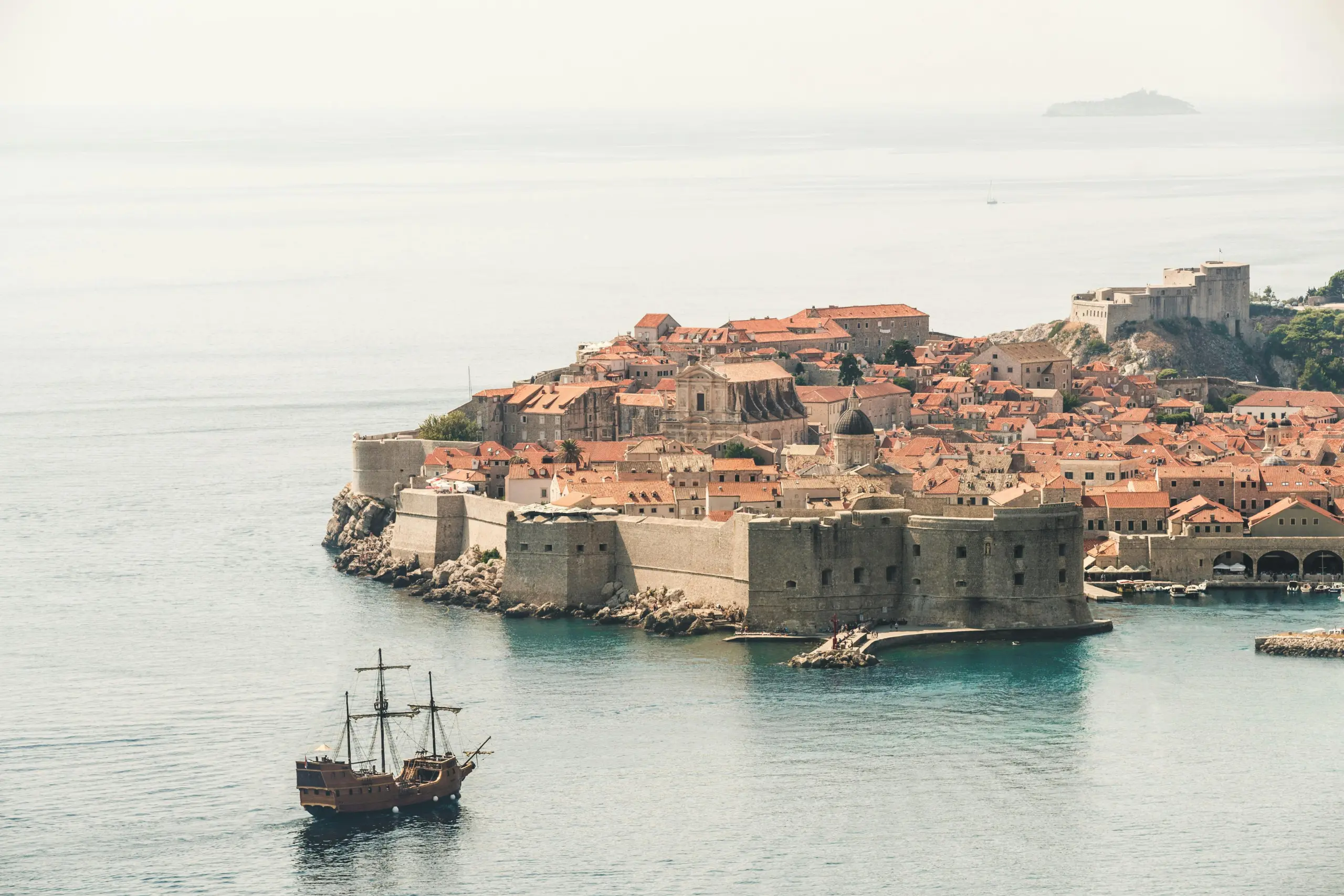
Dubrovnik is iconic but can be overwhelming during summer or with cruise ships. The Old Town Walls and views from the cable car are highlights, while souvenir shops and overpriced food require planning. Visiting in March provides pleasant weather and fewer crowds. Lodging near Lozica allowed peaceful evenings after day-trippers departed. Despite Game of Thrones fame, Dubrovnik remains a top place to experience Croatian history, architecture, and coastal beauty.