History of Cyprus
Cyprus Independence Day, celebrated on 1 October, commemorates the island country’s liberation from British rule in 1960. The third-largest island in the Eastern Mediterranean Sea, Cyprus had been under Ottoman control until 1878 and later leased and annexed by the British Empire. The London-Zurich Agreements signed on 16 August established the Republic of Cyprus with Archbishop Makarios III as its first President, marking the start of sovereignty recognized internationally. Prior efforts, including the guerrilla campaign of Ethniki Organosis Kyprion Agoniston (E.O.K.A.) by Greek Cypriots on April 1, 1955, aimed at enosis, demonstrated a military struggle for unification with Greece. Over time, cease-fire agreements and political negotiations, alongside support from Britain and Turkey, shaped a modern independent nation, celebrated in Nicosia with parades of the National Guard, Greek forces, police, and fire services, alongside speeches honoring Cyprus’s history, resilience, and identity.
Borders of Cyprus
Cyprus, a Mediterranean island of 9,251 km², lies approximately 80 km south of Turkey, 50 km west of Syria and Lebanon, northwest of Israel, north of the Sinai Peninsula, and east of Crete (Greece). Its land is divided between the Republic of Cyprus (5,896 km²) and the self-declared Turkish Republic of Northern Cyprus (3,355 km²), governed under de facto administration. The island’s strategic location connects Europe, the Middle East, and North Africa.
Key Figures of Cyprus
Zenon of Citium
Zenon of Citium (334–262 BC) of Larnaca founded the Stoic school in Athens, inspiring Roman thinkers like Seneca and Marcus Aurelius with philosophy focused on reason, virtue, and harmony with nature.
King Evagoras I of Salamis
King Evagoras I (435–374 BC) modernized Salamis, promoting Greek culture, arts, and education, turning the city into a hub of learning and cultural exchange.
St. Barnabas
St. Barnabas, a 1st-century Christian apostle and Cypriot Jew, traveled spreading Christianity alongside St. Paul and remains a revered national saint, foundational to the Church of Cyprus.
Archbishop Makarios III
Archbishop Makarios III (1913–1977), the island’s first President, shaped modern Cypriot identity, blending religious and political leadership and leaving a lasting legacy of independence.
George Michael
George Michael (1963–2016), born Georgios Kyriacos Panayiotou in London to a Cypriot father, became a global music icon with Wham!, solo career, and albums selling over 100 million records worldwide.
Anna Vissi
Anna Vissi (1957), the Diva of Greece from Pyla, Cyprus, gained fame for her albums, awards, and Eurovision performances, representing Cyprus on international stages.
Evridiki Theocleous
Evridiki Theocleous (1968) is a Cypriot singer known for Eurovision appearances in 1992, 1994, and 2007, blending pop-rock style with Cyprus and Greece’s music scene.
Michalis Hatzigiannis
Michalis Hatzigiannis (1978), a Cypriot musician, mixes pop and traditional Greek elements, producing platinum albums and gaining fame after the 1998 Eurovision contest.
Constantinos Christoforou
Constantinos Christoforou (1977), lead singer of boy band One, represented Cyprus in Eurovision and contributed to the island’s pop music culture.
Despina Olympiou
Despina Olympiou (1975), a singer-songwriter famous for romantic ballads, represented Cyprus in Eurovision 2013 and remains a beloved music figure.
National Things and Symbols of Cyprus
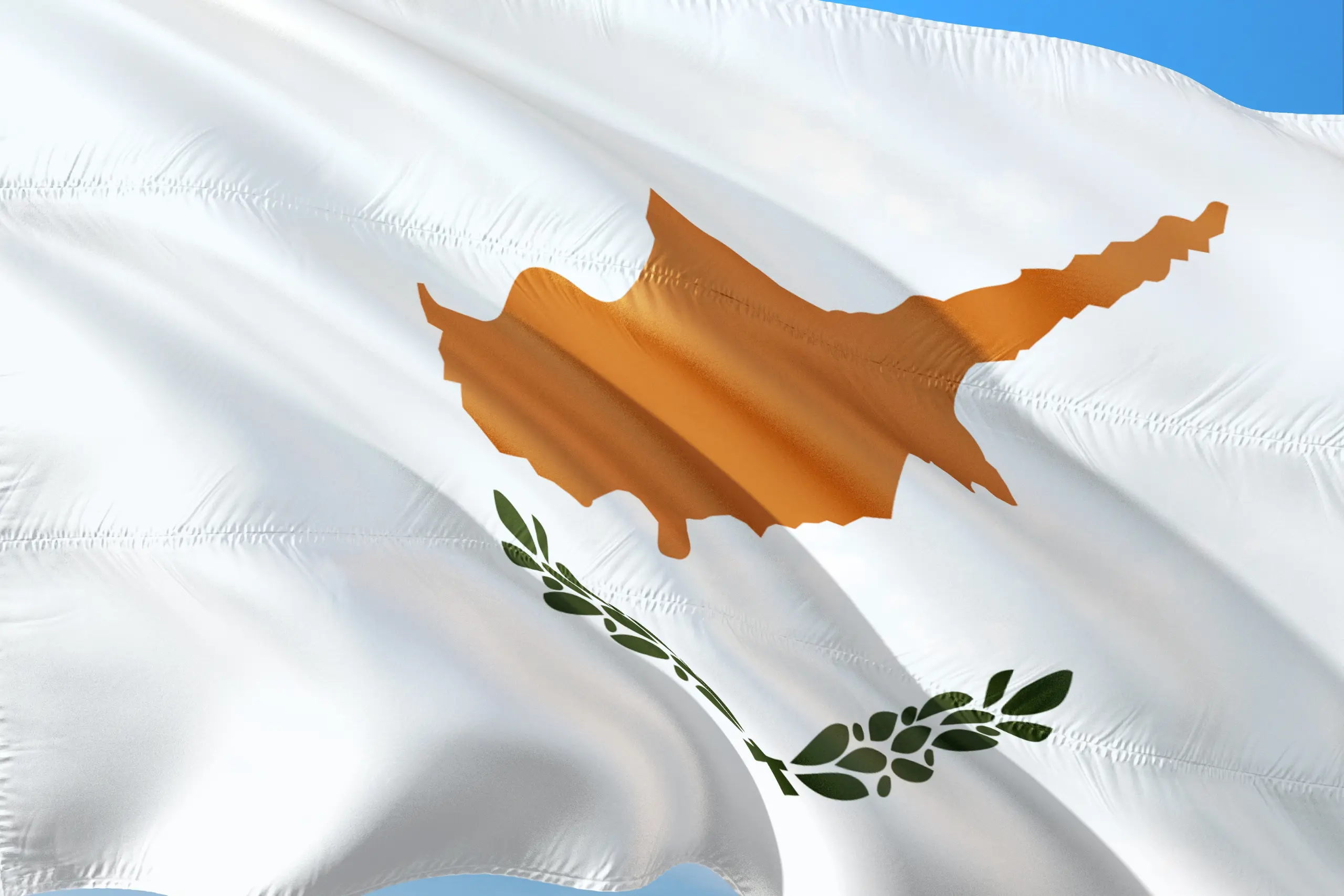
Flag of Cyprus
The Flag of Cyprus symbolizes national identity with its emblem and colors representing peace and unity on the island.
Emblem of Cyprus
The Emblem of Cyprus serves as a national symbol of heritage, featuring the island’s identity in official and ceremonial contexts.
National Anthem of Cyprus
The National Anthem, Hymn to Freedom, celebrates independence with patriotic lyrics and music, honoring Cyprus’s journey to sovereignty.
Motto of Cyprus
The motto, Freedom or Death, reflects the national spirit and determination during Cyprus’s struggle for independence.
National Colors of Cyprus
The national colors, blue and white, are displayed on the flag and symbolize identity, peace, and the island’s heritage.
National Animal of Cyprus
The Cypriot mouflon, a unique wildlife species, is an endemic animal found on the island, representing Cyprus’s natural fauna.
National Bird of Cyprus
The Cyprus wheatear, a native bird species, showcases the island’s avian wildlife and biodiversity.
National Fish of Cyprus
The Crucian carp inhabits Cyprus’s freshwater bodies and is the island’s recognized national fish.
National Tree of Cyprus
Quercus alnifolia, an endemic oak species, represents Cyprus’s flora and contributes to its ecological identity.
National Flower of Cyprus
The Rose is the national flower, symbolizing beauty and cultural significance across Cyprus.
National Fruit of Cyprus
The Fig, a widely cultivated and symbolic fruit, reflects agriculture and tradition on the island.
National Dish of Cyprus
Souvla, a traditional roasted meat dish, represents Cypriot culinary heritage.
National Alcohol of Cyprus
Brandy sour, a classic Cypriot beverage, is enjoyed across the island and tied to local tradition.
National Dance of Cyprus
Sirtaki, a folk dance, celebrates Cyprus’s cultural and musical traditions.
National Sport of Cyprus
Football is the most popular sport, connecting communities and fostering national pride.
National Instrument of Cyprus
The Buzuq, a traditional string instrument, is central to Cypriot folk music and culture.
National Airlines of Cyprus
Cyprus Airways serves as the national airline, linking the island with global destinations and supporting its tourism.
Currency of Cyprus
Cyprus uses the Euro (€), with exchange rates of €1 = CY£ 0.585274. Euro banknotes include 5, 10, 20, 50, 100, 200, and 500 denominations, while coins are 1, 2, 5, 10, 20, 50 cent, and 1, 2 Euro. Banks, hotels, and the Central Bank of Cyprus facilitate currency exchange, while Customs & Excise monitors cash and gold import/export. Being part of the Eurozone simplifies travel, banking, and payments for both locals and visitors.
Population
Cyprus has around 1.37 million residents, with Northern Cyprus home to about 382,230. Greek and Turkish are the main spoken languages, while Greeks constitute 98.8% of the Republic of Cyprus’s population. This demographic richness contributes to cultural festivals, traditions, and communal life on the island.
Tourist Places in Cyprus
Aphrodite Nature Trail
The Aphrodite Nature Trail (9.7 km) offers hikers scenic terrain near the Baths of Aphrodite with moderate elevation, panoramic views, and a chance to enjoy Cyprus’s natural beauty.
Avakas Gorge Trail
Avakas Gorge (11.6 km) features a canyon with dry rocks, rainwater paths, and grassy plains. Visitors can experience Cyprus’s wild landscapes while hiking safely with proper footwear.
Sea Caves in Ayia Napa
The Sea Caves in Ayia Napa (100 m) are a natural coastal phenomenon formed by erosion, creating a picturesque “window” in the rock, perfect for photography and exploration.
Bridge of Lovers
The Bridge of Lovers (20 m) is a scenic rock arch along the coast near Ayia Napa, offering stunning sea views for tourists walking the area.
Tombs of the Kings
Tombs of the Kings in Paphos are over 2000 years old and a UNESCO World Heritage site, showcasing Cyprus’s ancient history and architecture built for wealthy aristocrats and leaders.
Mount Olympus
Mount Olympus (1,952 m) is the highest peak in the Troodos mountains, offering easy to moderate hiking loops, steep climbs, and unique seasonal snow on the northern side.
Aphrodite’s Rock
Aphrodite’s Rock (100 m) is the legendary birthplace of the goddess of love, with stunning coastal views, sea foam, and beautiful sunsets attracting visitors year-round.